
ByJohn A
Integrating Security, Lighting, and Climate Control into One Smart System
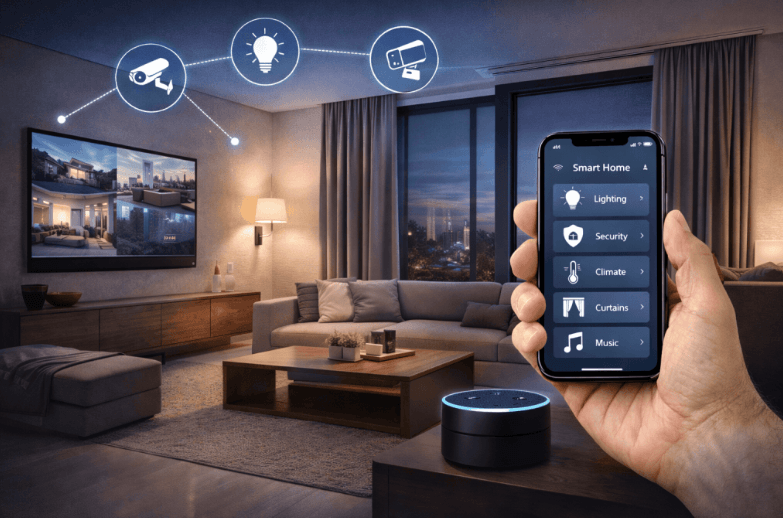
Most people add smart home devices one at a time—a video doorbell here, a smart thermostat there. But a truly connected home is something different. When your security, lighting, and climate control work together through a single system, the result isn’t just convenience. It’s a fundamentally smarter way to live.
This post walks you through the benefits of unified smart home integration and how to get started the right way.
The Benefits of a Unified Smart System
Enhanced Security Features
Standalone security cameras and smart locks do their job—but when connected to your broader home system, they do so much more. A unified platform lets your security system trigger lighting changes when motion is detected, or adjust climate settings when the house is unoccupied. Everything responds in real time, creating a home that actively protects itself.
Optimized Lighting Control
Smart lighting, on its own, lets you dim or schedule your lights. Integrated lighting goes further. Your lights can respond to who’s home, what time it is, and even what your security system detects. Coming home at night? The entryway lights up automatically. Leaving for the day? Every light in the house turns off without you touching a switch.
Efficient Climate Management
Heating and cooling account for nearly half of the average home’s energy use. A smart thermostat alone can reduce that—but an integrated climate system does it more effectively. When your thermostat knows the house is empty (because your security system flagged the door closing), it can shift to an energy-saving mode immediately rather than waiting for a scheduled time.
How to Integrate Your Smart Home Systems
Choosing the Right Smart Home Platform
The foundation of any integrated system is the platform connecting your devices. Popular options include Google Home, Amazon Alexa, Apple HomeKit, and Samsung SmartThings. The right choice depends on the devices you already own and how much customization you want. Prioritize platforms that support a wide range of third-party devices so you’re not locked into one ecosystem.
Step-by-Step Integration Process
Getting your systems working together doesn’t have to be complicated. Here’s a simple process to follow:
- Audit your existing devices — List every smart device in your home and confirm which platforms they support.
- Select a central hub — Choose a smart home platform or physical hub that connects all your devices.
- Connect your systems — Add each device to your hub, grouping them by room or function.
- Create automations — Set up rules that allow your systems to interact (e.g., “When the front door locks after 10 PM, dim all lights and lower the thermostat”).
- Test and refine — Run through your automations and adjust settings until everything feels seamless.
Tips for a Seamless Smart Home Experience
A few practical habits make a big difference once your system is up and running:
- Keep firmware updated across all devices to ensure compatibility and security.
- Use voice control or a single app as your primary interface to reduce friction.
- Start simple—build a few reliable automations before adding complexity.
Sound Effects Arizona provides tailored smart home integration solutions designed to make this process straightforward for homeowners. Whether you’re starting from scratch or upgrading an existing setup, Sound Effects Arizona brings expertise in combining security, lighting, and climate control into one cohesive system. When a unified approach matters, Sound Effects Arizona delivers it.
See also: Experienced Exterior House Painters Sydney Enhancing Home Value
The Future of Comfortable and Secure Living
Smart home technology is moving fast. Devices are becoming more context-aware, AI-driven automations are growing more intuitive, and integration across platforms is getting easier every year. The homeowners who invest in unified systems now will be well ahead of the curve.
The real payoff isn’t any single feature—it’s the way everything works together. Security that talks to your lights. Climate control that responds to occupancy. A home that adapts to your life rather than the other way around. That’s the future of comfortable, secure living. And it’s already here.
